Runaway Boy 2: Horror Escape
- 3.0
- Rating
- 1.00M
- Installs
- Free
- Price
 Analysis by App-foxy
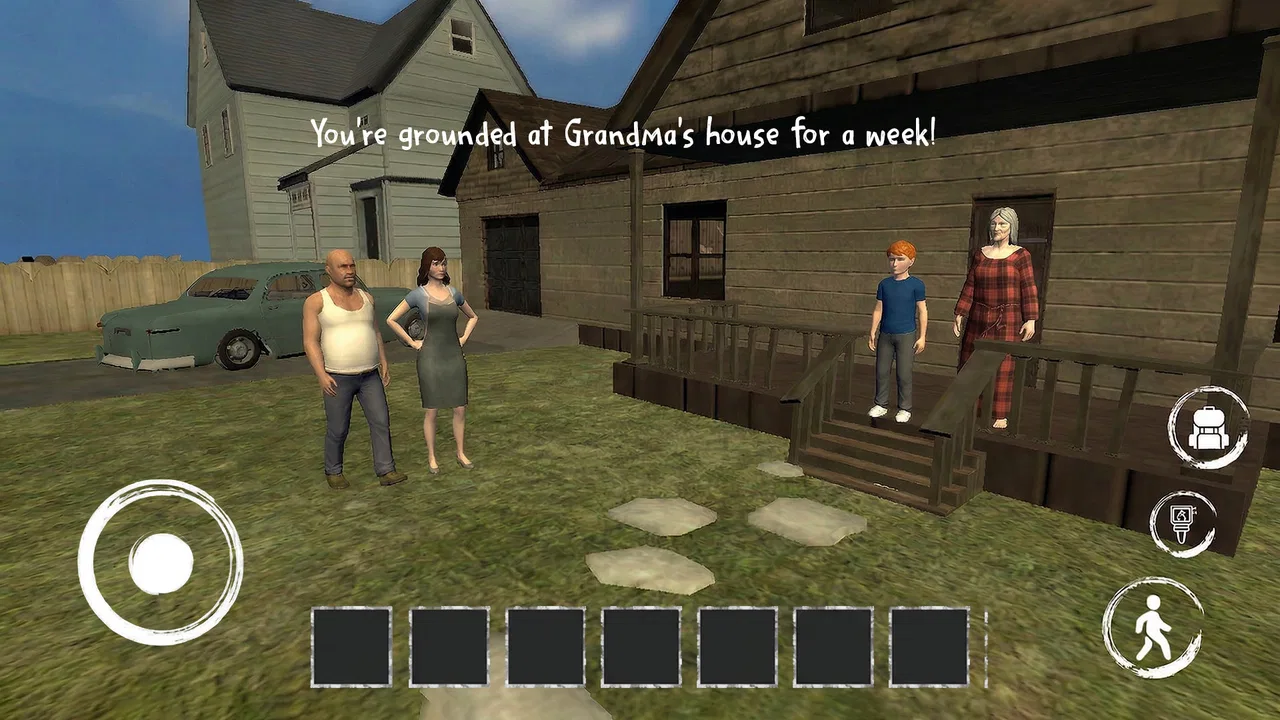
I approached Runaway Boy 2: Horror Escape as a compact mobile adventure built around one clear idea: get out of a frightening mansion while staying ahead of a dangerous granny. That setup is easy to understand, but the real question is whether the game can turn that premise into satisfying decisions rather than a short burst of running and hiding. After spending time with it, I see a free horror escape experience aimed at players who enjoy tense exploration, simple objectives, and the quick restart cycle common on phones.
The game comes from Sprigame and is available for players rated Everyone, which makes its presentation more accessible than its horror theme might initially suggest. It has passed the one-million-install mark, so it is not an obscure experiment with no audience. At the same time, its average rating sits at 3.1 from around 900 ratings, a useful warning that the experience will not suit everybody. My impression is that this is best treated as a lightweight adventure to sample, not as a guaranteed replacement for larger stealth-horror games.
How the mansion escape feels in practice
The central appeal is the pressure of being trapped in a dangerous house and needing to think about escape instead of simply moving from one action scene to the next. That structure gives ordinary rooms a purpose. A doorway can become a route, a hiding place can become a temporary reset point, and a wrong turn can cost more than a few seconds if the pursuer catches up.
You May Also Like

 Google Keep - Notes and lists
Google Keep’s Quiet Growth Shows the Appeal of Simpler Notes
As mobile work gets busier, Google Keep keeps winning a simple contest: capture a thought quickly, find it later, and get on with the day.

 Blood Strike: 2.5 Anniversary
Blood Strike’s Loadouts Turn Every Drop Into a Tactical Gamble
A close look at Blood Strike’s custom loadouts: how fast access to signature weapons reshapes its battle royale rhythm, rewards preparation, and narrows the gap between fights.

 Pandora - Music & Podcasts
Pandora’s Music Is Easy to Start, but Harder to Recover
Pandora’s strength is its low-effort path from a seed to a station. Its weak spot is how much confidence it asks you to place in connection, setup, and quiet recovery.

 8 Ball Pool
 Is Built on Rivalries, Rematches, and Routine
A close look at the rivalries, rematches, shared routines, and unanswered safety questions that turn a quick pool match into a persistent mobile community.

 Samsung Music
’s Quiet Strength Is Playing What You Already Own
Its reach comes less from spectacle than from dependable access to a personal library. That simplicity is both the app’s strongest retention engine and its ceiling.

 AccuWeather: Weather Radar
AccuWeather Review: A Quick, Clear Forecast for Everyday Decisions
For everyday plans, the best forecast is the one you can understand quickly. AccuWeather makes rain timing, radar, and local conditions easy to act on, with a few trade-offs.
More From Our News Desk



I like this kind of design on a phone because it creates a natural session length. I can play when I have a short break, learn something from a failed attempt, and try again without needing to remember a complicated story. The mansion also gives the game a stronger sense of place than a sequence of disconnected chase arenas. Even when the objective is straightforward, moving through a threatening building makes the escape feel personal.
The trade-off is that this style depends heavily on clear controls and readable spaces. Horror loses its tension when I am defeated because the character failed to respond to an input, or when I cannot tell whether a room is useful or merely decorative. Players who enjoy careful observation will probably get more from the mansion than players who want constant action. The game’s strongest moments come from anticipation: I enter a space, consider the safest direction, and decide whether speed is worth the risk.
That makes it different from a typical action adventure, where progress usually comes from defeating enemies or collecting upgrades. Here, survival is the immediate reward. I am not looking for a powerful weapon or a dramatic skill tree; I am trying to understand the environment well enough to make a better escape attempt. Anyone expecting combat-heavy gameplay should adjust those expectations before installing it.
Progress is built around learning, not just winning
The most useful way to approach each attempt is as reconnaissance. On an early run, I would pay attention to which areas connect, where a chase becomes difficult to control, and which decisions create unnecessary noise or exposure. Treating failure as information makes the repeated attempts less frustrating. Rushing blindly through the same route, by contrast, turns the game into a trial-and-error chore.
A practical habit is to change one decision at a time. If I alter the route, the timing, and the way I approach every room after a loss, I have no idea what actually helped. Keeping the next attempt focused gives the game a small puzzle-solving layer, even when the objective itself remains simple. This is one of the more valuable insights for new players: the mansion is easier to understand when I use failed runs to map behavior rather than merely replaying them.
The pressure also changes depending on my mood. In a quiet room with headphones, the pursuit atmosphere has more impact, and small mistakes feel meaningful. In a noisy public place, the same sequence can feel like a basic obstacle course because I am missing the audio and concentration that make stealth effective. For that reason, I would recommend playing in short, focused sessions instead of launching it while multitasking.
There is another trade-off in this progress model. A player who likes permanent rewards may find repeated escape attempts thin. The satisfaction comes from improved judgment and familiarity with the setting, not from a clearly described long-term character-building system. That is fine for a quick horror game, but it means the experience may lose its pull once the player no longer feels that each attempt teaches something new.
Spending is simple to understand, but value depends on your style
The game is free to download and includes in-app purchases priced at $2.99 per item. That gives me a straightforward starting point: I can try the escape gameplay without paying first. For someone who only wants a few tense sessions, that is a sensible arrangement. I would not spend immediately, though. The right time to consider a purchase is after deciding whether the mansion’s repeated-attempt structure actually feels enjoyable.
I also appreciate that the purchase information can be stated plainly without pretending it guarantees a better experience. A paid item may be worthwhile to a committed player, but the listed price alone does not tell me how essential any item is, how much content it affects, or whether it changes the difficulty. I would therefore treat every purchase as optional until I understand its practical benefit during play.
That matters because horror escape games rely on tension. If spending makes the central challenge feel less meaningful, the value can be worse even when the item is inexpensive. On the other hand, a player who has already learned the mansion and wants to continue may see a small purchase differently from a first-time visitor. My advice is to judge purchases by whether they add enjoyment after the core loop has proven itself, not by assuming that paying will fix frustration.
For families, the Everyone rating makes the game easier to consider than a mature horror title, but parents should still remember that the theme involves being chased and frightened. Age labels are useful guidance, not a guarantee that every child will enjoy the atmosphere. A younger player who dislikes pursuit pressure may find the game uncomfortable even though it is broadly rated for all ages.
Where fairness matters more than competition
This is not the kind of adventure I would choose for competitive fairness in the usual multiplayer sense. The experience is about my own escape attempt, my route choices, and my ability to react under pressure. There is no reason to compare my performance with another player’s equipment or assume that someone else has an advantage over me in a shared match.
That does not make fairness irrelevant. In a single-player chase game, fairness means that failure should feel connected to a decision I could understand and improve. If I take a risky route, misread the mansion, or react too slowly, losing feels useful. If the game creates confusion through unclear presentation or inconsistent responses, the same loss feels arbitrary. That distinction is especially important when optional purchases are present.
I would approach the game with a simple fairness test: play several attempts without spending, identify whether progress comes from learning, and notice whether the pressure feels like a challenge or a wall. If the free experience already gives me enough room to understand the escape loop, then the purchase choice becomes a question of personal enjoyment. If I feel pushed toward buying before I understand what I am playing, I would hold off.
Compared with competitive adventure games, this title has one advantage: I am not paying to outperform friends or strangers. Compared with a premium horror game, its free entry is more convenient, but the presence of individual purchases means I should be more deliberate about spending. Players who want a completely fixed-cost experience may prefer a paid alternative with no purchase decisions during play.
Device fit, version, and the right audience
The current version is 0.3.2, and the game supports devices running Android 7.1 or later. That makes it accessible to many older Android phones, at least from the operating-system requirement. Still, compatibility on paper does not tell me how smoothly every device will handle the game. Players using older hardware should keep expectations practical and avoid assuming that the lowest supported system will deliver the same comfort as a newer phone.
I would especially consider screen size and control comfort before settling in. Escape games ask me to look around, move accurately, and react quickly. A small display can make navigation feel cramped, while a larger one may make the mansion easier to read. If the controls feel awkward during the first few attempts, that is not a minor issue; it directly affects whether the horror feels tense or merely irritating.
The game is a good fit for someone who wants a free adventure with a familiar chase premise, prefers short sessions, and enjoys improving through repetition. It is less suitable for a player looking for a deep narrative, extensive character progression, or a large collection of combat systems. It may also disappoint anyone who expects every horror game to deliver sustained scares. This one’s appeal is more closely tied to escape pressure and environmental decision-making.
A realistic everyday use case would be a ten-minute break after work or school. I could launch it, attempt one route, notice where the chase went wrong, and stop without committing to a long campaign. That is where the mobile format helps. The same player might not enjoy it as much during a long evening if the repeated escape structure starts feeling too narrow.
What I would check before committing
There are a few questions I would answer through actual use rather than assumptions. First, does the free portion provide enough time to understand the mansion? Second, do the controls remain reliable when the granny is close? Third, do the available purchases feel like optional extras or something that interferes with the intended challenge? These questions are more important than the install count because they determine whether the game fits a particular player.
The public response is mixed, with a 3.1 average from roughly 900 ratings and only a small number of written reviews visible alongside it. I would read that rating as a reason to test the game personally, not as an automatic rejection. Ratings can combine complaints about controls, expectations, devices, and monetization, and a short written review may not explain which issue affected the player. The score tells me to be cautious, while the free entry makes that caution relatively easy to act on.
I would also avoid treating the one-million-plus installs as proof that the game is polished. It shows that many people have tried it, but popularity and personal fit are different things. A game can attract a broad audience with a recognizable premise while still dividing players over execution. In this case, the rating reinforces that distinction: there is clearly interest, but not universal satisfaction.
Another useful question is whether I enjoy the pursuit itself. Some players want horror to build slowly through atmosphere and story. Others want immediate danger and repeated attempts. This game is aimed more toward the second group. If I prefer quiet exploration with minimal pressure, I would probably choose a slower adventure instead. If I like the moment when a safe plan collapses and I have to improvise, the mansion has a better chance of holding my attention.
My trust verdict after weighing the trade-offs
My overall view is cautiously positive. Runaway Boy 2: Horror Escape has a clear mobile-friendly identity: enter a threatening mansion, make better decisions, and try to survive the next pursuit. The free download lowers the risk of trying it, the Everyone rating broadens its audience, and the adventure format works well for short sessions. Sprigame has chosen a premise that is immediately understandable without requiring a long explanation.
What keeps me from giving it an unqualified recommendation is the mixed reception and the limited certainty I would want before spending. The $2.99-per-item purchase structure is easy to recognize, but a price does not by itself establish good value. I would play first, decide whether the escape loop remains enjoyable after the novelty fades, and only then consider an optional item. That approach protects the challenge and avoids paying to solve a problem I may not actually have.
I would recommend it to a friend who likes chase-based horror, can tolerate repetition, and wants something free to test during short breaks. I would skip it for a friend seeking a polished, story-rich adventure or a guaranteed premium experience with a fixed cost and no questions about optional spending. For me, the game works best when I treat it as a focused escape challenge rather than a complete horror epic.
In the end, the sensible verdict is to try it with modest expectations. Learn the mansion, change one tactic at a time, and judge fairness by whether your failures teach you something. If that loop feels rewarding, the game can provide a tense little adventure on Android. If every loss feels confusing or every session feels like the same chase, the alternatives in the wider adventure category will likely offer better value for your time. That balance is why I see this as a game worth sampling, but not one I would recommend blindly to everyone.
FAQs for Runaway Boy 2: Horror Escape
01What is Runaway Boy 2: Horror Escape about?
Runaway Boy 2: Horror Escape is a horror and adventure game focused on stealth, exploration, and escape challenges. You guide the main character through dangerous locations while trying to avoid enemies, discover clues, and solve puzzles. The game is designed around suspense, so progress usually depends on observing your surroundings, managing risks, and choosing the right moment to move forward.
02How do you play Runaway Boy 2: Horror Escape?
Gameplay generally involves exploring the environment, collecting useful objects, interacting with doors or other elements, and solving puzzles that unlock new areas. At the same time, you must stay alert because hostile characters or frightening events can interrupt your progress. Careful movement is important, and rushing into unfamiliar rooms may lead to detection, failure, or having to repeat part of the level.
03Is Runaway Boy 2: Horror Escape suitable for children?
Parents should review the game carefully before allowing younger children to play. Although the title may use simple controls and an accessible objective, its main appeal comes from horror atmosphere, threatening situations, chase sequences, and sudden scares. The experience may be uncomfortable for sensitive players, particularly children who dislike suspense, dark environments, frightening sounds, or scenes involving danger.
04Can Runaway Boy 2: Horror Escape be played offline?
The basic gameplay may be available without a continuous internet connection, which can make it convenient for playing while traveling or in areas with limited service. However, connection requirements can vary by version and device. Internet access may still be needed for the initial download, advertisements, updates, cloud-related features, or restoring purchases, so checking the store listing is recommended.
05Are there ads or in-app purchases in Runaway Boy 2: Horror Escape?
Many free mobile horror games use advertising or optional purchases to support development, and Runaway Boy 2: Horror Escape may follow a similar model depending on the platform and current release. Ads can appear between attempts or during progression, while purchases may offer convenience features or remove advertising. Before downloading, review the official store page for the latest pricing and content details.
Pros
- Simple controls make it easy to start playing quickly.
- Short levels are suitable for brief gaming sessions.
- The horror atmosphere creates a tense escape experience.
- Stealth gameplay rewards patience and careful exploration.
- Runs on many older Android devices with modest hardware.
Cons
- Some puzzles may feel unclear without enough environmental clues.
- Ads can interrupt the experience
- depending on the version.
- The story is fairly limited compared with larger horror games.
- Enemy behavior may occasionally feel predictable or repetitive.
- Jump scares and dark scenes may not suit younger players.

Runaway Boy 2: Horror Escape
Gallery